Joan Myers Brown: From Club Harlem to international ballet stardom

News & Press, Uncategorized

by Bruce Klauber | Aug 21, 2025 |
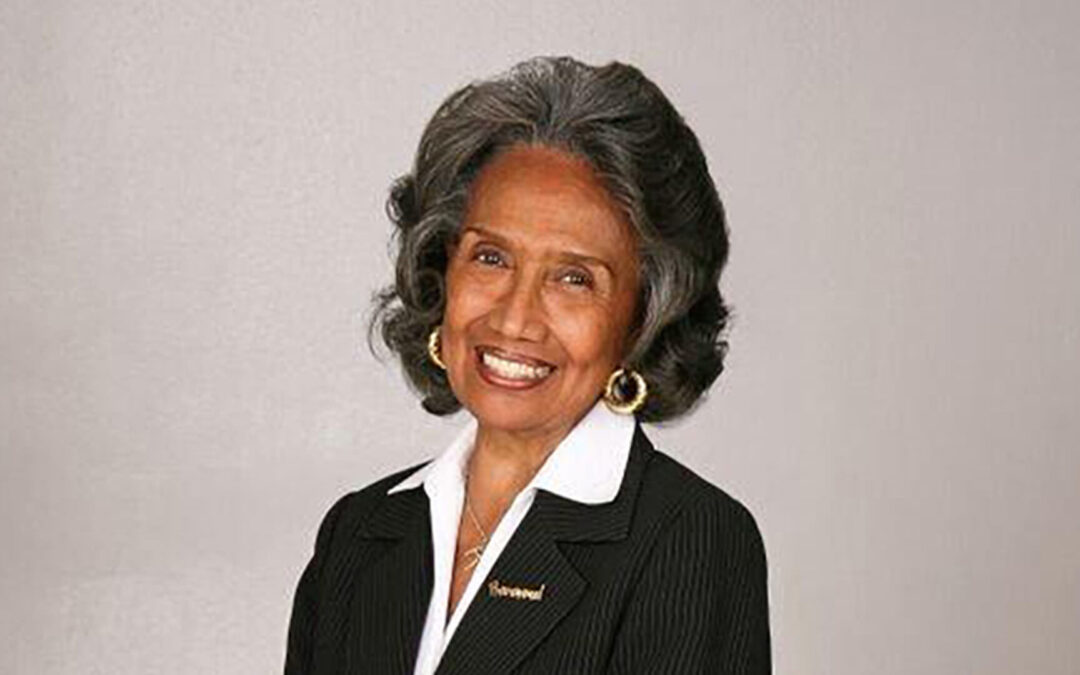
Joan Myers Brown, founder of the famed and iconic Philadanco Dance Company, is an international treasure.

This ageless force of nature – she’s happy to admit to being 93 – has won just about every award there is to win; and Philadanco’s substantial contributions to dance, arts and culture have been acknowledged all over the world.

Just some of those awards include the 2012 National Medal of Arts, presented to Brown by President Barack Obama; the Philadelphia Award; honorary doctorates from Ursinus College and the University of Pennsylvania, the American Dance Guild Honoree Award and The Philadelphia Inquirer’s 2017 Industry Icon Award.

But before she founded The Philadelphia School of Dance Arts in 1960 and Philadanco 10 years later, Joan Brown was a professional dancer. One of her first major jobs, and the one that helped launch her career, happened in Atlantic City’s Club Harlem.

A native Philadelphian and West Philadelphia High School graduate, the young Brown began her journey into the world of dance courtesy of her gym teacher, who suggested that she join the ballet club and take private lessons. What made Brown’s start so unique is that she was Black and her first teachers were white.

“In the 1940s and 1950s, ballet schools throughout America were segregated,” Brown explained to Suzi Nash of the Philadelphia Gay News. “If you lived in Philadelphia and were Black, you were not permitted to try on shoes in a store and you were barred from the white ballet schools.”

From there she studied with Sydney King and Marion Cuyjet, two Black ballet teachers, which led to a scholarship that allowed her to study both ballet and the Katherine Dunham technique in New York at the Dunham School. Not long after, she took a class for a year with the English-born Antony Tudor when he came to teach for the Philadelphia Ballet Guild. That was the first desegregated ballet class in the city.

While in the city, she danced in recitals, the Philadelphia Cotillion Balls, and the local Black cabaret circuit, then in clubs throughout the country.

An early highlight for Brown was her appearance in the corps of “Les Sylphides,” staged for a performance with the Philadelphia Orchestra.

Despite how impressive her early resume was, a living still had to be made. And by 1958 she was making a living by dancing at Atlantic City’s Club Harlem as a part of the popular Larry Steele “Smart Affairs” revue as “featured ballerina en pointe,” and as choreographer. Some of the performers she backed as a part of Steele’s revue included Sammy Davis Jr., Cab Calloway and Pearl Bailey.

Brown formed a particularly strong bond with Bailey.

“I worked with Pearl Bailey on and off for two years, beginning around 1958,” Brown told me in a recent conversation. “She saw me dance at Club Harlem and hired me to dance in her show. At that time, Atlantic City was segregated, and Pearl was working in a club on the white side of town. I was working on the Black side of town. After her show, she came into Club Harlem. As for Pearl, she fluctuated. Sometimes she was an SOB and sometimes she was a sweetheart. It was according to how she felt that day. She fired me one day – she thought I was cursing – and before I could get back home to Philly, she had the company manager called me to come back.”

The work was hard and not pleasant all the time.

“Some places you had to mix,” Brown explained. “After the show you had to sit at the bar and socialize with the patrons. I wasn’t a drinker, so I didn’t care for it. I’d stay in the dressing room or hide in the bathroom. That’s one time when segregation actually helped me.

“Because in places like Atlantic City, or Las Vegas, when I was with Pearl, I was the only Black girl in the show, and I wasn’t allowed in the clubs. So the white girls had to mix and I got to go home!”

Eventually realizing that as a Black ballet dancer she would never find work in a classical ballet company, she decided to open the Philadelphia School of Dance Arts as a way to start addressing that issue.

“In 1960, I was still dancing,” she recalled. “I was performing and choreographing shows, mostly at Club Harlem. I taught ballet in the afternoon and shuffled off to Atlantic City every night.

“The hardest part was the commute those first six years. I went to sleep at the wheel one night, and after that, my boyfriend at the time was nice enough to drive me back and forth, or I’d ride the bus.”
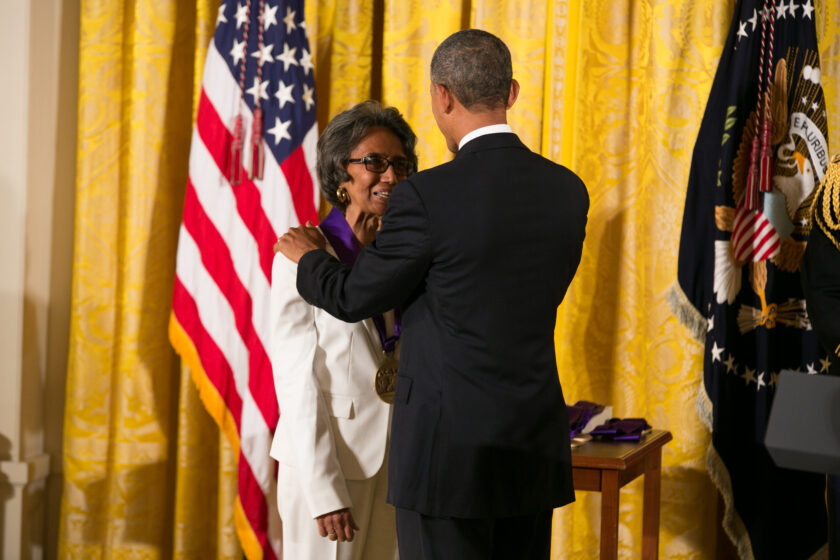
Brown was awarded the 2012 National Medal of Arts, presented by President Barack Obama.

Joan Myers Brown was determined.

In 1970 she made the decision to create new opportunities by forming Philadanco. She started with 30 students. With time came community recognition and visibility, as did Brown’s realization that the dancers in the school would likely face the same challenges she did with performance opportunities.

Now a Kimmel Center for the Performing Arts resident company, and an internationally renowned company that sells out venues all over the world, Philadanco’s influence continues to be pervasive.

Just ask some of Philadanco’s distinguished alumni, including Alvin Ailey American Dance Theater choreographer Hope Boykin, Tony Award winner Leslie Odom Jr. and Willia Noel Montague of Broadway’s “The Lion King.”

“Philadanco has truly made me into the artist and woman I am today,” Noel said. “Joan Myers Brown’s loving instruction not only nurtured my skills as an artist, but also taught me the invaluable lesson that you are only as good as your last performance. Whenever I step on stage, I find a new energy and meaning for the gift of dance, and I owe much of my success to my Philadanco family.”

Certainly, Philadanco is unique because of its racial makeup, but that’s not why the company is revered and sells out concerts all over the world. A recent review of a Philadanco performance at Bucknell University illustrates why this company is so special.

“Philadanco stunned the audience with their captivating ability to tell stories through movement,” wrote reviewer Rachel Johnston for Bucknell’s Performing Arts website. “The choreography was astounding and perfected, leaving the audience members to murmur their awe. Their ability to effectively convey different stories and passion made their performance truly one of a kind.”
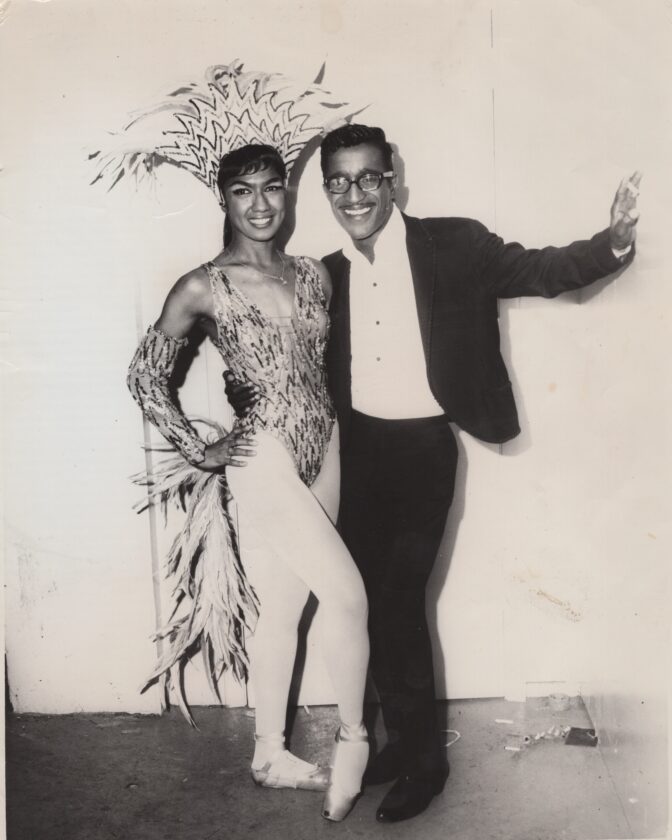
One of Brown’s first major jobs, and the one that helped launch her career, was in Atlantic City’s Club Harlem.

In 2020, after 50 years at the helm of Philadanco, Joan Myers Brown announced her intention to “step away” from her role as artistic director, handing those reins to long-time Assistant Artistic Director Kim Bears-Bailey.

Brown, naturally, will always hold the title of “founder,” and those who know this miraculous dynamo are not surprised that she continues in action on Philadanco’s behalf on a daily basis. As The Philadelphia Inquirer recently said, “The buck still stops with Brown.”

Bruce Klauber is the author of four books, an award-winning music journalist, concert and record producer and publicist, producer of the Warner Brothers and Hudson Music “Jazz Legends” film series, and performs both as a drummer and vocalist.
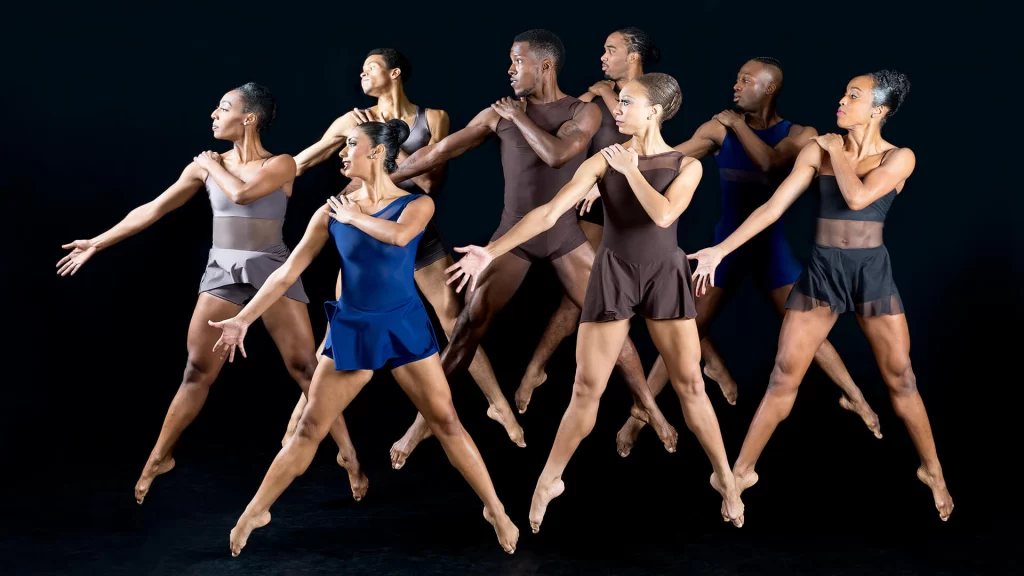
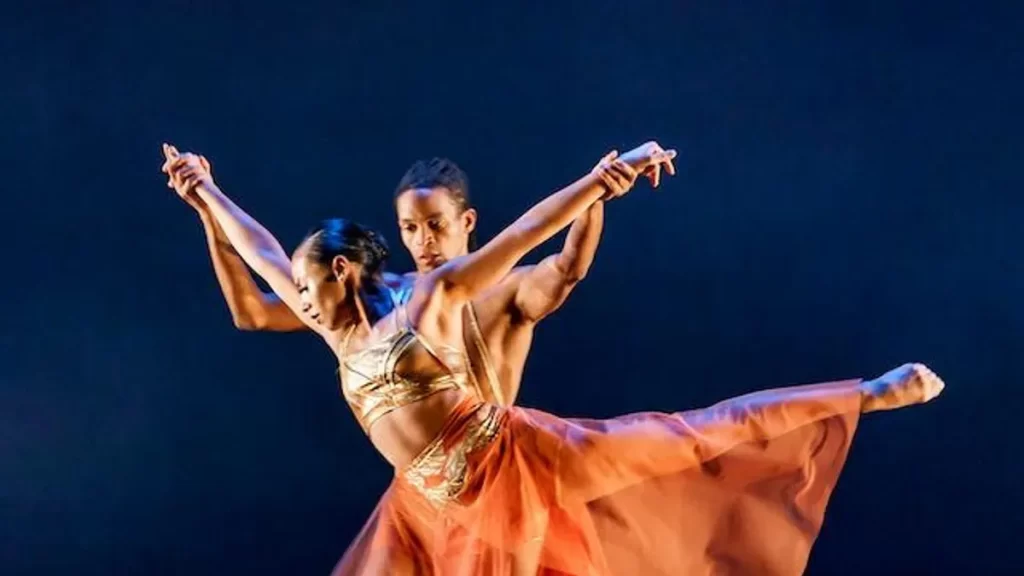
Global professionals for Carifesta dance workshops

News & Press, Uncategorized

written by Barbados Today Published: 19/08/2025 Updated: 26/08/2025

Dance is stepping into CARIFESTA XV as a language lab. “People seem so close but yet so far,” says Dance Lead for the Festival, Aisha Comissiong, while reflecting on how Caribbean dancers often watch global masters from a distance. “This is one of the first CARIFESTAs where a great effort is being made to bring professionals from across the dance world into the Caribbean space for people to learn from directly.”

Comissiong is explicit about her objective in enlisting these global professionals: “I’m hoping that exposure to Caribbean dance excellence will inspire new works. It will inspire new languages… our next generation of Caribbean dance pioneers to come up with new and emerging Caribbean dance forms and nation dance languages.”

The guest list reads like a map of influence. Luther Brown (USA/Jamaica) —two-time Emmy-nominated choreographer behind work for Jennifer Lopez, Janet Jackson, Mary J. Blige, Nicki Minaj and more—delivers a hip hop masterclass at EBCCI on Saturday, August 23, 12–2:30 p.m. 

PHILADANCO! (The Philadelphia Dance Company), renowned for innovation and the preservation of African-American dance traditions, leads a Modern/Contemporary masterclass on Thursday, August 28, 10 a.m.–12 p.m., also at EBCCI.

icole Pinky Thomas (Modern/Dunham), an educator whose lineage work keeps technique tied to history, and the week’s centre of gravity, is unmistakable: global excellence, grounded in cultural truth.

A PHILADANCO! partner is also offering two scholarships to their Summer Intensive—one Barbadian, one regional— with the workshop functioning “almost like an audition.”  That alone makes the week a once in a generation bridge for dancers who have the talent but not always the travel budget.

Comissiong is designing the conversations around career as carefully as the choreography: Q&As with the visiting companies will pull back the curtain on professional practice. She says those workshops will provide “insight into what it is to ‘make it big’… what spaces to be in, who to be networking with and how to prepare to make dance your career.”

Below is the schedule of workshops:

Sunday August 24: Nicole Pinky Thomas (Modern/Dunham); Justin Poleon (Barbados — Cheer Dance); Amritam Shakti (Trinidad — Indian dance).

Monday August 25: L’Acadco (Jamaica — Lantech); Tabanka Dance Ensemble (Afrobeats); Omega St Hilaire & Kanille Brudy (SVG — Folk); Daves Guhza (Zimbabwe — Traditional).

Tuesday August 26: Garth Fagan Dance (USA — Fagan Technique); Tivoli Dance Troupe (Jamaica — Dancehall); Manchoniel Cultural Group (Jamaica — Folk).

Wednesday August 27: NDTC (Jamaica — Caribbean Contemporary); Gem.in.I Project (Barbados — Inclusive Movement); Tabanka (Talawa Technique).

Friday August 29: Mark Vaughan (Barbados — West African); Shauné Culmer & K’Lysa Knowles (Bahamas — Bahamian Folk).

The Bajan dance community will be involved in several events including the Opening Ceremony, Barbados Dance Night, Future in Motion youth showcase, Dancing Archipelago, and even theatre productions like the Ghanaian Mansa Musaand Barbados’ Man Overboard

For generations, the Caribbean’s movement has been praised and policed, celebrated and side-eyed. CARIFESTA XV says: the way we move is not something to tone down for export; it is something to tone up, refine, and broadcast on our own terms.

Under the Architecture of Innovation banner, the Symposia and Big Conversations ask hard, structural questions about dance: digital platforms and monetisation, institutional training gaps, models like Edna Manley that can be adapted, and funding for companies across the region. The festival’s dance programme thus engages with both policy and pedagogy

Comissiong’s excitement is both personal and generational. “I’m very excited for CARIFESTA Dance,” she says. “I think Caribbean dance excellence is going to be on stage… It’s so critical for us to see what’s happening just a hop, skip and a jump across the islands… I’m hoping this will inspire new languages and our next generation of Caribbean dance pioneers.” She even dares to quantify the dream: if we already recognise one or two nation dance languages, “I’m hoping in the next ten years we have about three, four, five more.”

Book early for the EBCCI masterclasses — Luther Brown (Sunday, August 24, 12–2:30 p.m.) and PHILADANCO! (Thursda,y August 28, 10 a.m.–12 p.m.), which are magnets for both pros and students. Bring water, bring questions, bring humility and stay for the Q&As. 

If you’re eligible for the scholarship, be audition-ready for PHILADANCO!,  since the awarding partner expects to select one Barbadian and one regional dancer. (PR/BT)

PHILADANCO! celebrates Black dance in Philadelphia with Founder’s Day

News & Press, Uncategorized

Camille Bacon-Smith | Jul 23, 2025

PHILADANCO!’s Founder’s Day puts Philly Black dancers in the spotlight. (Photo courtesy of PHILADANCO!.)

For Founder’s Day, July 25, at the Dell, PHILADANCO! will celebrate its 55th anniversary with some old favorites, and a DANCO! family celebration, bringing together Philadelphia’s Black dance community for dance and music, and a night out in Fairmount Park. The tickets cost a little less, and the parking is free, but Marlisa Brown-Swint, director of operations (and daughter of founder and artistic advisor Joan Myers Brown), promises “you still get the same excellence, but at a different venue than the Kimmel.”

Something a little different

Swint told me that “As long as I can remember, even as a child, we’ve always had this connection with the Dell.” The company took some years off, but in 2012, they were looking to do something different at the Dell. “It started with Ms. Brown bringing works that she thought would be great for the community, and then we started doing some alumni performances, and all the things that the founder preferred. That’s how we came up with Founder’s Day.” Each year, the company sets a different theme; this year, DANCO! is sharing the spotlight with groups from around the city to celebrate Black dance in Philadelphia. The idea was to bring together all the forms of dance that thrive in Philly—hip-hop, jazz, contemporary, dance of the African diaspora, and more.

When I asked what audiences should expect, Swint told me that house music vocalist Lady Alma would open the show, backed by hip-hop and house dancers Just Sole. (She’s fabulous and I expect there will be dancing in the seats as well!) Kulu Mele African Dance and Drum Ensemble will be there, as will Grace Dance Theater, among other groups performing. For many of the companies, it is a sort of reunion: their founders are alumni of the school or company. 

But PHILADANCO! is the star of the show. They’ll be dancing some of Brown’s favorites, including Francisco Gella’s The Seasons, an interpretation of Vivaldi’s Four Seasons, and George Faison’s Suite Otis, one of my own favorites. It is set to the music of Otis Redding and spans the emotions from a lyrical expression of grief to a sharp-dressed strutting line dance in hot pink. 

R&B group Gerald Alston and the Manhattans round out the show, getting the audience on their feet for some dancing in the aisles. Even there, Swint told me, it is all about family. “One of our alumni [Edna Chew Alston] married Gerald Alston, so that’s how he’s always connected to PHILADANCO!.” 

Food concessions will be open at the Dell. Outside food and drinks are not allowed inside the venue, but people can picnic in the surrounding park, as long as they stow the picnic basket in the car before the show.

WHAT, WHEN, WHERE

PHILADANCO! Annual Founder’s Day Show. Choreography by Francisco Gella and George Faison, and appearances by Lady Alma, the Manhattans, Just Sole, Kulu Mele, and others. $25-$40. July 25, 2025, at the Dell Music Center, 2400 Strawberry Mansion Drive, Philadelphia. thedellmusiccenter.com.

ACCESSIBILITY

The Dell Music Center is a wheelchair-accessible venue.

Philadanco! The Philadelphia Dance Company performs in Charlotte under the watchful eye of founder Joan Myers Brown

News & Press, Uncategorized

WFAE | By Gwendolyn Glenn

Published May 22, 2025 at 1:45 PM EDT

"Philadanco! The Philadelphia Dance Company" performs May 28, 2025, at the Knight Theater.
“Philadanco! The Philadelphia Dance Company” performs May 28, 2025, at the Knight Theater.

The world-renowned “Philadanco! The Philadelphia Dance Company” will be in Charlotte for a one-night performance on May 28 at the Knight Theater. 

It’s the first local show for the mostly African American company.

Philadanco! was founded by Joan Myers Brown, who turns 94 this year and still has a strong presence with the company. Brown is the honorary chairperson for the International Association of Blacks in Dance and has received numerous awards over her career, including the National Medal of Arts from President Obama in 2012. Additionally, she was honored as a Master of African American Choreography in 2005 by the Kennedy Center in Washington, D.C. WFAE’s Gwendolyn Glenn talked with Brown about dance and more.

Joan Myers Brown founded the world-renowned Philadanco! dance company in 1970.

Gwendolyn Glenn: Philadanco! dancers perform to different styles of music to mesh with the ballet, modern and African dance forms they execute. It also reflects the moods of the electrifying and intense pieces they present on stage — centered around identity, social justice and cultural themes. 

In 1970, Joan Myers Brown, whose father is from Wadesboro, North Carolina, founded Philadanco! to give Black dancers, locked out of majority dance companies, a place to perform professionally. 

Brown says she makes sure the dancers she trains are versatile in all dance styles.

Joan Myers Brown: Because I think when my dancers look for a job and move on, I said whatever they ask you, ‘Can you do …?’, you can say, yeah, I can do that. So you don’t have to get turned down for the coming jobs.

Glenn: How many dancers are in your company?

Myers Brown: Right now, we have 18 active dancers and two apprentices.

Joan Myers Brown, founder of Philadanco!, works with a dancer in her studio. She has trained more than 4,000 dancers over the years.

Glenn: You will turn 94 this year, on Christmas Day, so you’ve been doing this for a long time. How many dancers have you trained?

Myers Brown: Well, you know, I have a dancing school. In fact, I have two dancing school. I have between 600-800 kids in my schools a year. The last count we had, about 4,000 that went through our program here. I try to be very demanding in all aspects of my training.

Glenn: Well, let me ask you this, I’ve seen pictures of you. And when you said you’re very demanding, I’ve seen one photo where you had that look on your face — that was like wow!

Myers Brown: That’s that grandma look that says you gotta get it right, girl.

Glenn: Get it right. That’s exactly what you looked like. So, do you still watch rehearsals and the practices?

Myers Brown: Well, I come into the office at 9 in the morning, do the office work and the dance school starts at 4 (p.m.). And then the dance company comes in at 7 (p.m.) and I leave at 11 (p.m.), making sure everybody does everything right. 

But I would rather be here trying to keep what I do going in the way I want it to, rather than sitting in an old folks home playing bingo. So, I’m very healthy, I don’t have any pains and I take no medicine. So I’m still at it.

Glenn: That’s a 14-hour day.

Myers Brown: Yeah, that’s what they tell me. I do it seven days a week.

Philadanco! dancers have performed worldwide and will be on stage for one night in Charlotte at the Knight Theater on May 28.
Philadanco! dancers have performed worldwide and will be on stage for one night in Charlotte at the Knight Theater on May 28, 2025. 

Glenn: So what keeps you going? What keeps you still having that love for Philadanco!, and the school and to be there every day?

Myers Brown: I think actually that with the dancing school, I see a young kid, say 4 or 5 years old and they say, ‘I can’t wait to grow up so I can be with Philadanco!,’ or ‘I love to dance’ — and that makes you want to keep doing it, because they are generations that are coming on. And I make the people who teach for me have the same enthusiasm and commitment to things that I have.

Glenn: And you mentioned that you want to make sure that when your dancers leave your company, that they can go anywhere. [And] they can do all styles of dancing. Who are some of your dancers that have gone on to other major dance companies?

Myers Brown: Well, Anthony Burrell choreographed for Beyoncé and for Mariah Carey. Others, most of them ended up going to the [Alvin] Ailey company. Tommie-Waheed Evans, who moved here from California to be in my company, ended up at The Joyce Theater in New York. Danni Gee, who was in my company, is the program director for The Joyce Theater. Choreographers that I hired include George Faison.

Glenn: And tell people who haven’t heard of Faison who he is.

Myers Brown: He was the original choreographer for the original Black “Wiz.”

Glenn: For which he made history in 1975 when he became the first African American to win a Tony Award for best choreography for “The Wiz.” Well, tell me a little about you. Where did you grow up, and when did you become interested in dance?

Joan Myers Brown, founder of Philadanco! pictured as a youth. She says she never realized her dream of being a ballerina in a major company because of racism.
Joan Myers Brown, founder of Philadanco!, pictured as a youth. She says she never realized her dream of being a ballerina in a major company because of racism.

Myers Brown: I grew up in Philadelphia, and my mother was part of what they called the Philadelphia society. They put their little girls into dancing school and they took piano. So, my mother did put me in dancing school, but I got out of dancing school when I lost my shoes the first week. My mom is, ‘I ain’t buying no more.’ But when I got to high school, my gym teacher encouraged me to dance because she saw me in her classes. So, I really got hooked on dance trying to prove that I could do it by being the only Black girl in the ballet club. 

And it just kept going from there. And I’m still trying to prove to the powers that be that the Black girls — just give them the opportunity. And boys, too. 

Even today, this is the first time in 35 years they’ve hired a Black girl at the Philadelphia Ballet Company. So, opportunities and access haven’t changed.

Philadanco! founder Joan Myers Brown shown in her early days during a performance at Club Harlem
Philadanco! founder Joan Myers Brown shown in her early days during a performance at Club Harlem.

Glenn: What companies did you dance for? And did you do it professionally?

Myers Brown: I danced professionally, but guess what? I ended up dancing at nightclubs behind Pearl Bailey, Sammy Davis, Jr. and Cab Calloway. 

There was a particular club in Atlantic City — the Club Harlem. I was a choreographer. And I worked at the Chitlin’ Circuit. But I was always the girl they put on ballet slippers and pointe shoes. I was always a feature dancer, but I never got to be that ballet dancer I wanted to be. So that’s why I say it’s important that I still make sure there are places for girls like me who want to be what I wanted to be.

Glenn: And did you get turned down a lot from the majority white ballet companies?

Myers Brown: Well, actually, you talking about 1949 and 1950. And there were no white companies hiring nobody Black. You couldn’t even go to a white school. So, I was going to a (dance) school of two women that had learned the same way I learned — from somebody Black.

Philadanco! founder Joan Myers Brown says growing up, she was the only Black dancer in this ballet club in Philadelphia.

Glenn: Well, you will be in Charlotte. Tell me about some of the pieces that will be performed here by Philadanco!

Myers Brown: The repertory I usually try to do is a repertory that is representative of us as a people. One of my choreographers, Ray Mercer, did a piece that is strictly modern. And “Movement for Five” is a story by one of my former dancers about the five men who were falsely accused in Central Park [and falsely convicted of the rape and assault of Trisha Meili in Central Park in 1989], specifically talking about how those young men felt about being falsely accused and the women that supported them.

Glenn: What’s next for you? Will you ever retire?

Myers Brown: Eventually I’m going to have to. But I’m fortunate that my daughter has stepped up to the plate. And she works beside me and tells me, ‘Mom, I got this.’ My artistic director has been with me for 44 years. She danced in the company for 20-something years. So I feel that it would be safe to stay home — but most of the time they gotta ask me a question.

Philadanco! The Philadelphia Dance Company performs May 28 at the Knight Theater in Charlotte.
“Philadanco! The Philadelphia Dance Company” performs May 28, 2025, at the Knight Theater in Charlotte.

Glenn: And what do you want the legacy for the company to be?

Myers Brown: I hope that what we do is remembered as being good work — and that the opportunities will continue for youngsters that have dreams of being dancers.

Glenn: Brown says she lost a young dancer to murder in New York City last year. She established a scholarship in his name to provide assistance to those who cannot afford to train as a dancer with a better chance of making it professionally.

You can see Philadanco! on May 28 at the Knight Theater. They’re also holding a masterclass on May 27 at the Harvey B. Gantt Center for African American Arts and Culture. The company kicks off a European tour in late September.